Calm at Home

Rooms that let you rest

How the spaces you live in speak to your nervous system, and a handful of restrained, considered ideas for making home feel like an exhale.

A Landing Place by the Door

A Landing Place by the Door

One low table, one bowl, one lamp. A gentle boundary between the noise of the day and the quiet of home.

The nervous system takes cues from thresholds. A small, uncluttered surface where keys and phone come to rest signals a transition, the day is set down here. Warm light over cool, natural materials over synthetic, and nothing that asks to be dealt with.
The Case for the Empty Corner

The Case for the Empty Corner

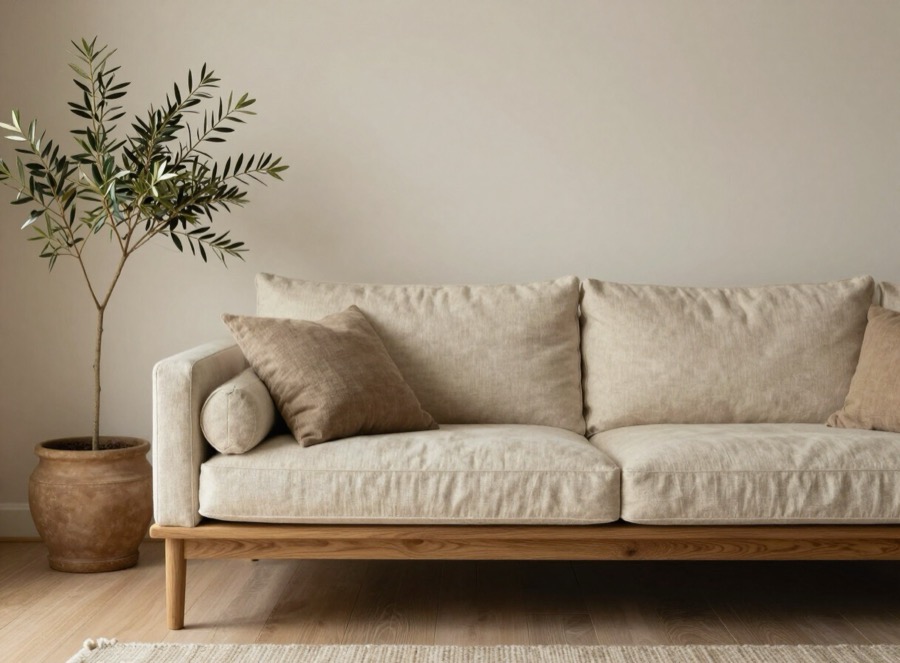
Resist the urge to fill it. Visual rest is not wasted space, it is space doing its work.

A study of women's homes linked cluttered, unfinished spaces with a stress-hormone pattern tied to poorer recovery across the day. Leave one corner deliberately spare, a single plant, or nothing at all. The eye needs somewhere to land that asks for nothing. Restraint, here, is the whole design.

Lighting for the Downshift

Lighting for the Downshift

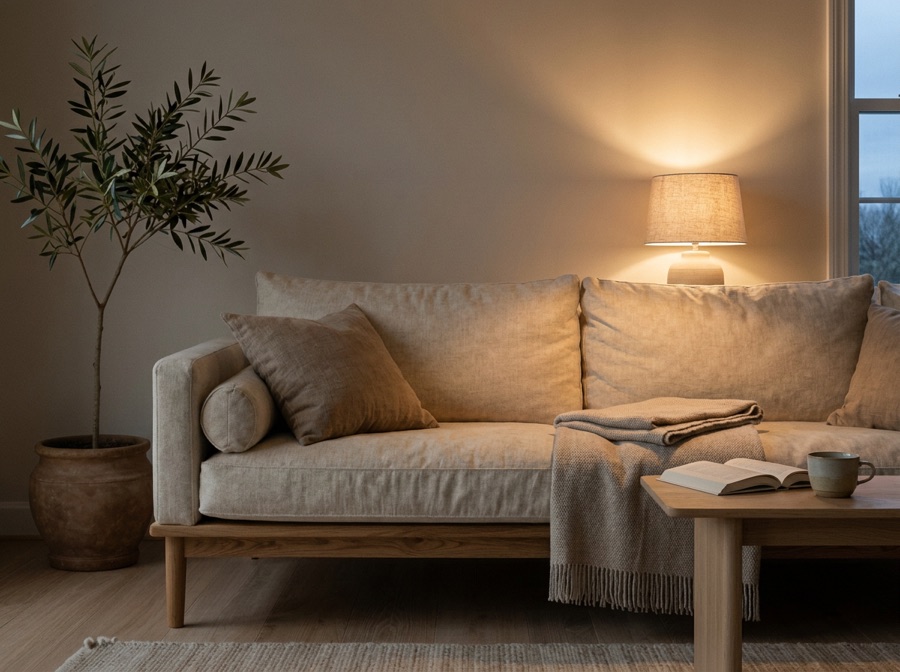
Trade overhead brightness for low, warm pools of light as evening comes.

As the sun drops, switch off the overhead light and turn on lamps at eye level with warm bulbs. A study found that ordinary room light in the hours before bed suppressed melatonin and shortened the body's sense of night. Low light lets the natural evening rise happen on time.